
type
Post
status
Published
状态
发布
date
Apr 6, 2026
slug
best-marathon-training-tips
summary
训练马拉松时,需以舒适的低强度配速为主,增加跑步距离和长跑次数,以提高成绩。研究表明,快速跑者的训练量是慢跑者的三倍,且大部分训练应在低强度下进行。比赛前的减量训练和碳水化合物补充也至关重要。
tags
健康
马拉松备战
运动健康
category
精读精译
icon
password
参考标签
#马拉松训练 #跑步技巧 #低强度训练 #碳水化合物补充 #跑步计划 #马拉松备战 #运动健康 #跑者指南 #提高成绩 #舒适配速
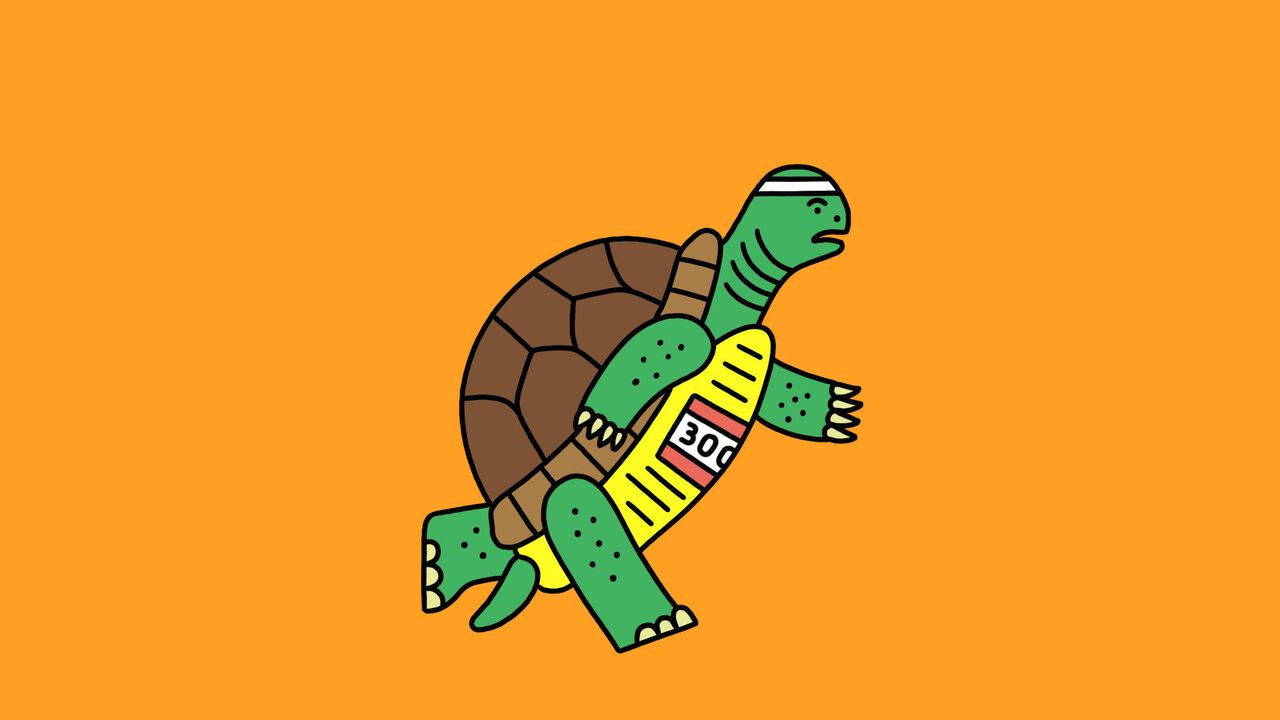
Illustration: Cristina Spanò
Dec 26th 2025 | 3 min read
For many would-be marathoners, January seems as good a time as any to dust off their trainers and begin the journey to running 26.2 miles (42km). To hit a goal time or even just complete the race without injury, runners need to follow a training plan.
1月来了,想跑马拉松的人,拿出跑鞋来,征服42公里的旅程开始了。无论是想跑进目标时间,还是无伤完赛,你都得按计划训练。
Running ability depends on three main factors, each partly genetic but all amenable to training. The first is the lactate threshold: the point at which lactate builds up in the blood faster than it is cleared away. The threshold marks the highest intensity at which the body can meet energy demands aerobically before it starts to rely more heavily on less efficient pathways. The second factor is VO₂ max, the maximum rate at which the body can deliver and use oxygen during exercise. Both of these can improve quickly with training.
跑步能力取决于三大因素,都有一定的遗传性,但都能通过训练改善。第一个是乳酸阈值:超过这个临界点,血液中乳酸堆积的速度就会超过清除速度。这个阈值是身体通过有氧方式满足能量需求的最高强度,超过这个点就得更多依赖效率较低的供能路径。第二个因素是最大摄氧量(VO₂ max),也就是身体在运动中输送和利用氧气的最大速率。这两个因素都能通过训练快速提高。
The third factor is how much energy a person expends to cover a given distance in a given time. This depends on both body shape and technique, and tends to change more slowly.
第三个因素是单位距离消耗的能量。这跟体型和技术都有关系,改善起来比较慢。
There have been no high-quality randomised controlled trials comparing the effectiveness of different marathon-training plans, but analysis of large datasets of active runners can provide insights. One study, published in 2024 by researchers based across Britain, Ireland and New Zealand, analysed 16 weeks of training data from roughly 120,000 marathon runners who logged their runs on Strava, an exercise-tracking app.
目前还没有高质量的随机对照试验比较不同马拉松训练计划的效果,但对大量资深跑者数据的分析能让我们一窥究竟。2024年,英国、爱尔兰和新西兰的研究人员发表了一项研究,分析了约12万名马拉松跑者在运动记录应用Strava上记录的16周训练数据。
Their main finding was that distance matters during training. The fastest marathoners—those finishing in less than two-and-a-half hours—covered roughly three times as many kilometres per week as the slowest. The number of long runs completed and the number of days spent training were also correlated with faster times. For example, runners whose training involved ten long runs (those over 20km) were, on average, nearly 50 minutes faster, in the final race, than those who completed none.
研究发现:训练量是关键。跑得最快的马拉松选手——两个半小时内完赛的人——每周跑量大约是最慢选手的三倍。长跑次数越多,训练天数越勤,成绩就越好。比如说,训练中跑了10次长跑(超过20公里)的跑者,比一次长跑都没跑过的人,平均快了将近50分钟。
Crucially, much of this training was done at low intensity. Almost all the extra distance logged by the eventual faster runners was completed at an “easy” pace, slower than marathon speed and below the lactate threshold. Lower-intensity training seems to improve aspects of running physiology with lower risk of injury and less need for long recovery breaks.
关键是,大部分训练都是低强度完成的。那些更快完赛的跑者,训练中额外的距离几乎全是以”轻松“配速跑完的——比马拉松配速慢,而且低于乳酸阈值。低强度训练似乎能改善跑步的生理机能,受伤风险更低,也不需要长时间恢复。
Elite athletes typically spend around 80% of their time running slowly but for casual runners this can seem counter-intuitive. Indeed, Cailbhe Doherty of University College Dublin says that most casual runners are "working too hard" during their training.
精英运动员80%的训练时间都是慢跑,但对业余跑者来说,这有点不符合直觉。都柏林大学学院的Cailbhe Doherty说,大多数业余跑者在训练时都”太拼了“。
Even as a race draws near, there are still measures that can be taken to improve performance. Tapering training becomes critical—cutting mileage three weeks before the event, rather than just one, can improve finishing times by up to 2.6%. This rest allows muscles to replenish their glycogen stores (chains of glucose molecules).
即使比赛临近,还是有办法提升成绩的。减量训练就很关键——在比赛前三周就开始减少跑量,相比提前一周,完赛时间能提前2.6%。这段休息时间能让肌肉补充糖原储备(葡萄糖分子链)。
Carbohydrate loading in the final 48 hours is vital for the same reason. Dr Doherty recommends consuming eight to ten grams of carbohydrate per kilogram of body weight—a surprisingly difficult target for most people to hit.
比赛前48小时的碳水补充同样关键。Doherty博士建议,每公斤体重摄入8到10克碳水化合物,这个量对大多数人来说很难达到,出乎意料得难。
In summary, run at a comfortable pace as often as possible for as long as possible. It may not be time-efficient, but it seems that the best way to race fast is to train slow.
总结一下:训练马拉松,尽可能以舒适的配速,尽可能多跑,尽可能常跑。这可能并不节省时间,但想在比赛中跑得快,训练时就得跑得慢。
© 版权声明
- 译文允许非商用转载/引用,但须完整保留:译者署名、本文链接、本版权声明与原文来源链接。
- 原文版权归原版权方所有;译文版权归译者所有(如适用)。
- 文章观点为原作者观点,不代表译者立场。
- 未经授权,不得将本文(含译文)用于商业用途、批量转载聚合、训练/微调数据集或其他自动化抓取与再分发。
- 如权利人认为本文内容存在不当之处,请联系我删除或更正。
Loading...


